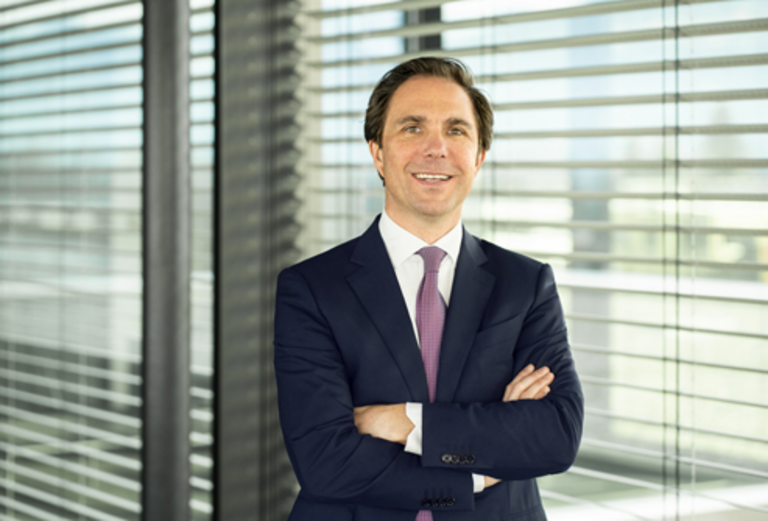
Wolfram Senger-Weiss is the Chief Executive Officer of Gebrüder Weiss, one of the world’s oldest continuously operating transport and logistics companies. Since taking over as chief executive on 1 January 2019, he has overseen the strategic direction of the Austrian logistics group, guiding its expansion into new markets while accelerating investments in digital logistics systems and sustainable transport solutions.
Headquartered in Lauterach, Vorarlberg, Austria, Gebrüder Weiss operates a global logistics network that includes around 180 company-owned locations across Europe, Asia, and the Americas. The company employs approximately 8,600 people and provides services spanning road transport, air and sea freight forwarding, contract logistics, and digital supply chain management. In 2025 the company reported revenues of approximately €2.73 billion, reflecting stable growth despite disruptions in global trade and supply chains.
Senger-Weiss studied business administration at Vienna University of Economics and Business, one of Europe’s leading institutions for business and economics. Early in his professional career he worked at Berndorf AG, an Austrian industrial group, where he served as assistant to the executive board and gained experience in corporate management and strategic planning. He later worked in the United States with a start-up company, an experience that broadened his perspective on international entrepreneurship and cross-border business operations.
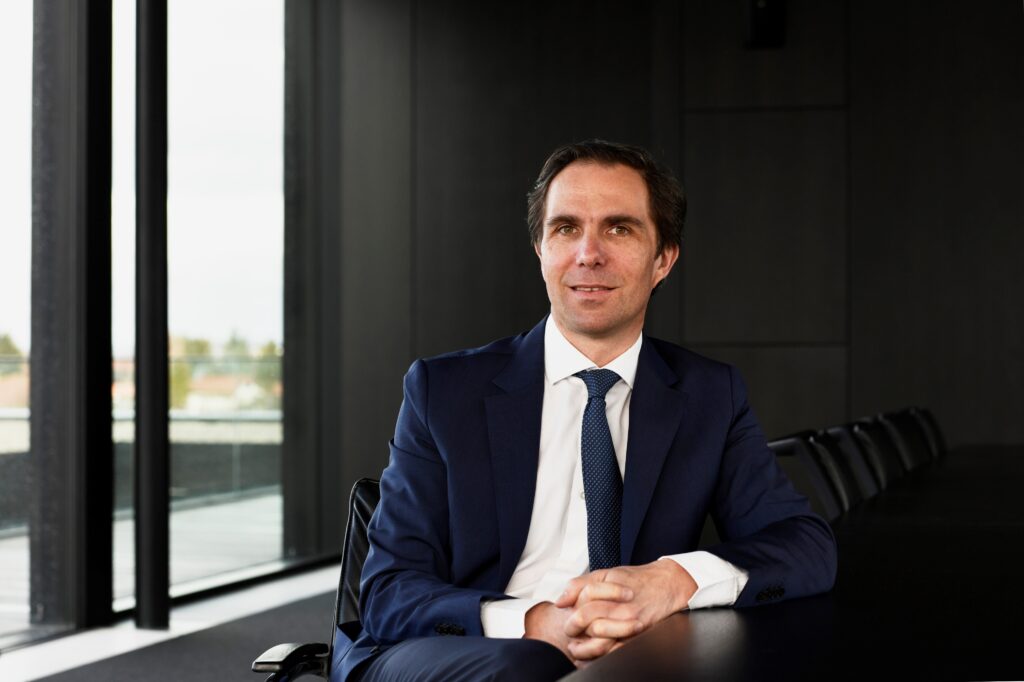
He later completed postgraduate studies at INSEAD, the international business school with campuses in France and Singapore, earning an MBA that strengthened his expertise in corporate finance, global management, and strategic leadership.
Senger-Weiss joined Gebrüder Weiss in 2003, initially leading the company’s corporate controlling department. In this role he was responsible for financial planning, performance monitoring, and investment analysis across the group’s expanding logistics network. His work positioned him at the center of the company’s strategic decision making during a period when the logistics industry was undergoing rapid consolidation and international expansion.
In 2005 he was appointed to the company’s management board, taking responsibility for finance, legal affairs, investments, mergers and acquisitions, and corporate governance. During this period Gebrüder Weiss strengthened its presence across Central and Eastern Europe, expanding logistics operations into countries such as Hungary, Czech Republic, Slovakia, Croatia, and Serbia. The company also extended its network toward the Black Sea region and Central Asia, positioning itself along emerging trade corridors linking Europe with Asia.
Beyond his corporate responsibilities, Senger-Weiss has played an active role in representing the logistics sector. Between 2012 and 2018 he served as president of the Zentralverband Spedition & Logistik, Austria’s national association for freight forwarding and logistics companies. In this role he advocated for transport infrastructure development, regulatory modernization, and the competitiveness of European logistics networks.
When he became chief executive in 2019, Senger-Weiss inherited responsibility for guiding a company whose origins date back more than 500 years. The Weiss family’s transport activities in the Alpine region can be traced to the fifteenth century, when merchants relied on organized courier and freight services to move goods across the Alps. Over centuries, those early transport networks evolved into the modern logistics company now known as Gebrüder Weiss.

Under his leadership the company has pursued a strategy centered on digital transformation and geographic expansion. Investments have been directed toward automated logistics terminals, digital freight management systems, and supply chain visibility platforms that allow customers to monitor cargo flows in real time. In 2025 the company invested approximately €146 million in logistics infrastructure, automation, and digital systems.
Sustainability has also become a central part of the company’s strategy. Gebrüder Weiss has invested heavily in renewable energy systems across its logistics facilities. Photovoltaic installations across its network now generate around 15,000 megawatt-hours of electricity annually, helping reduce the company’s carbon footprint and energy costs. The company has also begun integrating electric delivery vehicles and low-emission transport solutions into its fleet, while offering customers carbon-tracking tools for international shipments.
Geographically, the company has continued expanding along Eurasian trade corridors. Logistics hubs have been developed in regions such as the Caucasus and Central Asia, strengthening connections between European markets and emerging trade routes linking Europe with Asia.
Despite its global reach, Gebrüder Weiss remains a privately owned company with strong financial stability. Its equity ratio has remained above 60 percent, reflecting conservative financial management and a long-term investment philosophy that prioritizes infrastructure development and operational resilience.
As chief executive, Wolfram Senger-Weiss leads a logistics organization whose history spans half a millennium but whose future depends on adapting to digital supply chains, changing trade routes, and growing environmental expectations. His leadership combines stewardship of one of the logistics industry’s oldest institutions with a strategy aimed at positioning the company for the evolving demands of global commerce.